University of Cambridge Kendo Society

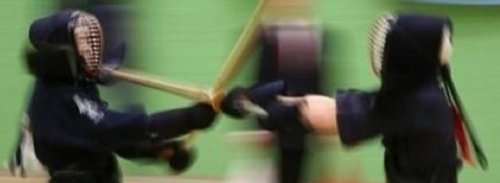
kendo action
Photo credit: Ed Naylor

Welcome to Tsurugi Bashi Kendo Kai, the Kendo Society of the University of Cambridge. Kendo is the Japanese "way of the sword". We are a student society but our practice sessions are also open to non-students. We welcome all levels, from total beginner to experienced dan grades. Several of us have trained in Japan and our coaches are licensed by the British Kendo Association. If you wish to practice kendo in Cambridge, or even just watch a session, get in touch with us.


100 Kirikaeshi for the tsunami victims: Cambridge, 11 June 2011

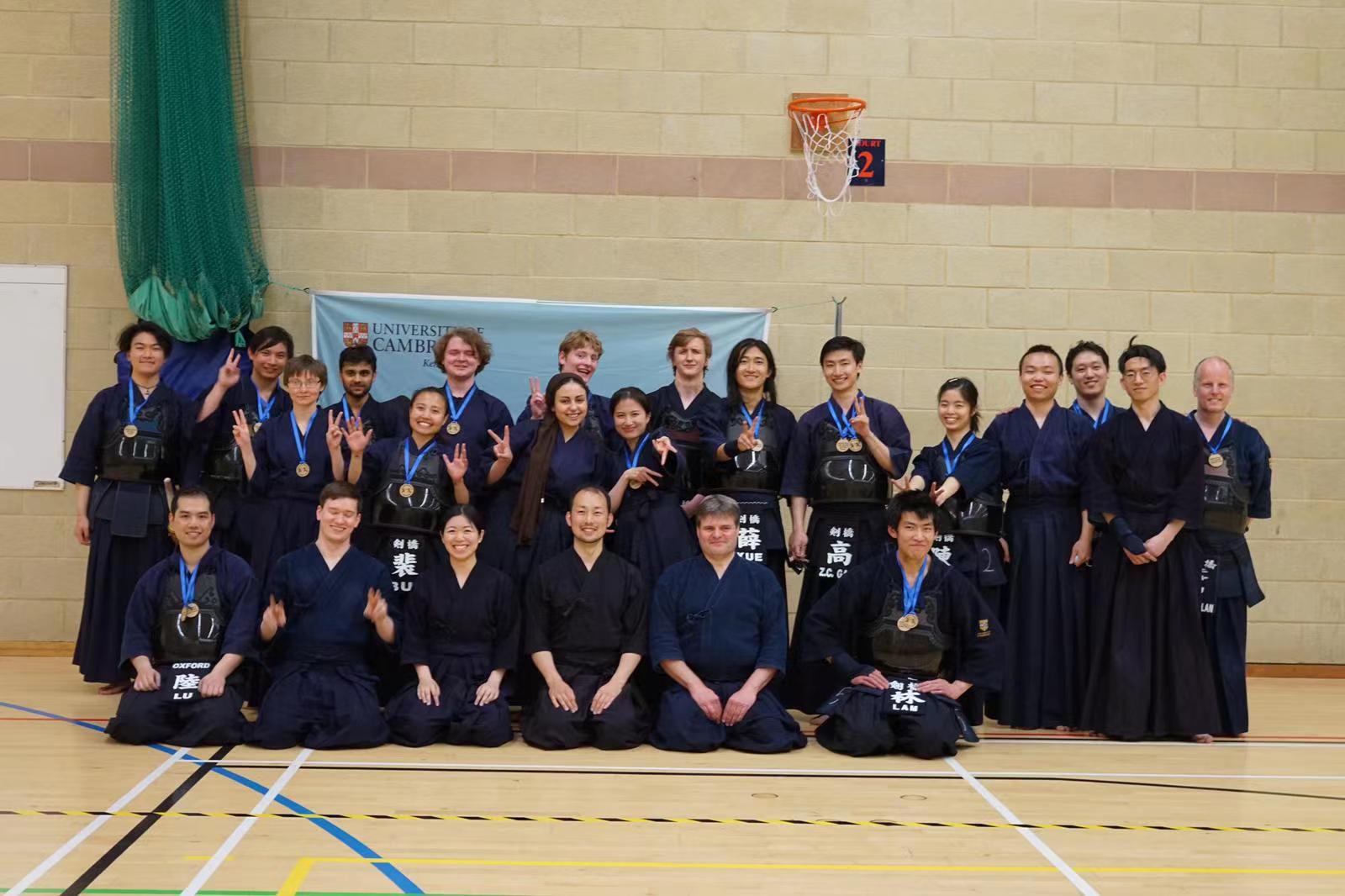
100 kirikaeshi participants

The solidarity and fundraising event described below was held at Tsurugi Bashi in 2011. We republish the report on the anniversary of the tragedy as a memorial.

This day was just three months since the earthquake in the Northern Japan and we completed 100 kirikaeshi each, 10 people attended so 1000 in total. Well done to all participated and made donations!! £825 collected on the day alone for the British Red Cross Japan Tsunami Appeal.

I am very proud of the 10 kendoka (Matsuda-sensei from Kodokan and the Kendo Charity Group, plus nine members of Tsurugi Bashi, names below) who took part in today's kendo charity event.

Everyone was a little scared at the prospect of performing 100 kirikaeshi in the same morning. For non-kendoka, a kirikaeshi is a fundamental kendo exercise performed in pairs: in short, one partner shouts at the top of their lungs while rushing forwards and back and delivering a sequence of 21 large sword cuts, which the other parries; then the two swap roles and the second partner delivers another 21 cuts. The whole operation takes about a minute and is a very intensive anaerobic exercise. Every kendo training session starts with at least half a dozen of these. A dozen is definitely not a lightweight exercise. We were going to do a hundred, thus totalling over 2000 cuts and 2000 parries each.

Some will consider our physical exertion as pointless. For us it was a way to commit to a non-trivial effort, to put our determination to the test and to prove that even a seemingly impossible task can be conquered if we really devote all our energies to it---and if we could do the impossible for the kirikaeshi, we could do it for the fundraising too.

Each participant would contribute a personal donation to the Red Cross's Japan Tsunami appeal and would also raise further funds from family, friends and colleagues. (Our member Mikyung Jang even managed to auction off some broken bamboo slats, from used shinai, to be used as "garden sticks", whatever that means. Impressive!) We hoped to welcome kendoka from many other British dojo but in the end, owing in part to clashes with other events, it was only Matsuda sensei and nine of us, despite our dojo having in theory over 30 members. Nonetheless, it was still a fantastic event, with a great atmosphere of commitment and mutual support, and we did raise quite a bit of money on the day just between the ten of us!

Matsuda sensei came with a big poster on which she wrote the numbers from 1 to 100. Then she stuck a red marker next to it with blue-tack. Every time we'd do one kirikaeshi, all the kendoka would rotate and the one nearest the wall would quickly grab the marker and strike out the corresponding number. The full poster with 10 rows of 10 numbers looked really daunting! I asked her if we'd do any breaks in between and she replied "we'll see".

Two of our members, Vincenzo Votta and Simon Reeve, did not have armour yet, and they were assigned to a fixed location at the end of the line; the other eight members had armour and rotated around them. We started, full of energy, and the first ten or fifteen went like a breeze. When we got into the third row, with the twenties, our arms were getting heavier, the salty sweat was burning in our eyes and the mouth felt dry from all the screaming. Once we got in the thirties we could all really feel it. At some point Matsuda sensei asked if it was OK to continue. Of course nobody wanted to be first to give up and so, implicitly encouraged by each other, we kept at it, and got to forty, and beyond. We finally took a break at fifty kirikaeshi. We took off our men and kote and had a drink and a few minutes of rest. We were sweating like fountains and almost couldn't feel our arms, but strangely we recovered very quickly.

Then back to work! The first ten after the break were doable, but it was definitely not the same as the first ten of the first set. Whenever one felt tired, it was encouraging to see the commitment in the kiai and in the eyes of the partner! An uplifting experience. At some point I noticed that my shinai had broken (possibly during a previous kirikaeshi) so when we changed partners I quickly swapped it for a second one I had prepared, without missing a beat. Another time, my partner had to replace his shinai, but took longer so I did my kirikaeshi against empty air. By now it wasn't just the arms: the feet were aching too, the legs wouldn't run as fast and it was a challenge to continue to make each cut as big as it had to be. Anyway we kept going, and going, and going, surprising ourselves, sometimes noticing another partner who seemed just about to die of exhaustion and instead was keeping at it like everyone else. Row after row, a red mark would strike out even those numbers in the seventies and eighties that had seemed almost impossible to reach.

From the sidelines, the families of some of our members watched, politely and respectfully though it must have been incredibly boring and repetitive, and occasionally took photographs. At around 85, Matsuda sensei announced an unexpected break at 90, to ensure that we'd do the last 10 properly. We took off men again and had some more water, but it was a shorter interruption this time.

During the break, Martin Steadman who had missed one round owing to shinai replacement, told me that he wanted to redo it; so, before restarting for the final 10, the two of us did one extra kirikaeshi to compensate. Then everyone else joined in and we did those final ten. What an experience!

After the final rei and stretching we checked how much we had collected between us, and it was several hundred pounds already; but a few people said: "Wait! I haven't put mine in yet!", and by the time they did we had an amazing 825 pounds. This was beyond my wildest dreams given that there were so few participants compared to what I had hoped for. I was so impressed that only 10 kendoka could put together 825 pounds! It was really a brilliant result, and a good match for our physical effort.

Everyone was exhausted but happy of having achieved this. In truth it is only a very small contribution, for people who have lost their dear ones and their homes, but it is a sincere one.

In recognition of this achievement I promoted our junior members to their next kyu grade, reckoning that what they had done today was a more serious challenge than the kyu exam they would have had to sit later this month, and that they had already demonstrated true kendoka spirit. This was an unexpected surprise for them, but they fully deserved it. (Matt rightly reminded me that this is what I had done on a previous occasion years ago. It was right to do it again.) So, double congratulations to

  • Martin Steadman
    promoted to 2-kyu
  • Steve Goddard
    promoted to 3-kyu
  • Vincenzo Votta
    promoted to 4-kyu and to wearing armour
  • Simon Reeve
    promoted to 4-kyu and to wearing armour

"Single" congratulations also to the yudansha participants:

  • Kazuyo Matsuda sensei
  • Frank Stajano
  • Matt Jackson
  • Matt Marley
  • Damien Vadillo
  • Mikyung Jang

I wish we could have had more, at least from our own members; but after running this dojo for nine years I learnt not to worry too much for those who don't come (everyone has more important engagements at some point or other) and instead rejoice for those who do. Let's hope that the kendoka who didn't participate will at least contribute with a donation. As Matt announced, we'll keep the collection open for a few more days, until Friday 17 June: cheques payable to the British Red Cross and handed in to Matt Jackson or me. We also look forward to further institutional sponsorships. A list of all donors and amounts (except those who might request anonymity for some reason) will be published soon.

In closing, MANY THANKS to everyone who took part, to the families of our members for support, to Matt Jackson for invaluable logistical support and especially to Matsuda sensei for coming to Cambridge and making this happen with us.

Frank Stajano
Dojo leader, Tsurugi Bashi Kendo Kai (University of Cambridge Kendo Society)


Valid XHTML 1.0 Strict